- Welcome to Chamber of Food Industries
- +2-0121-2222670
- +202-257-48627
- info@egycfi.org.eg

Traditional Dairy Products Subdivision Meeting
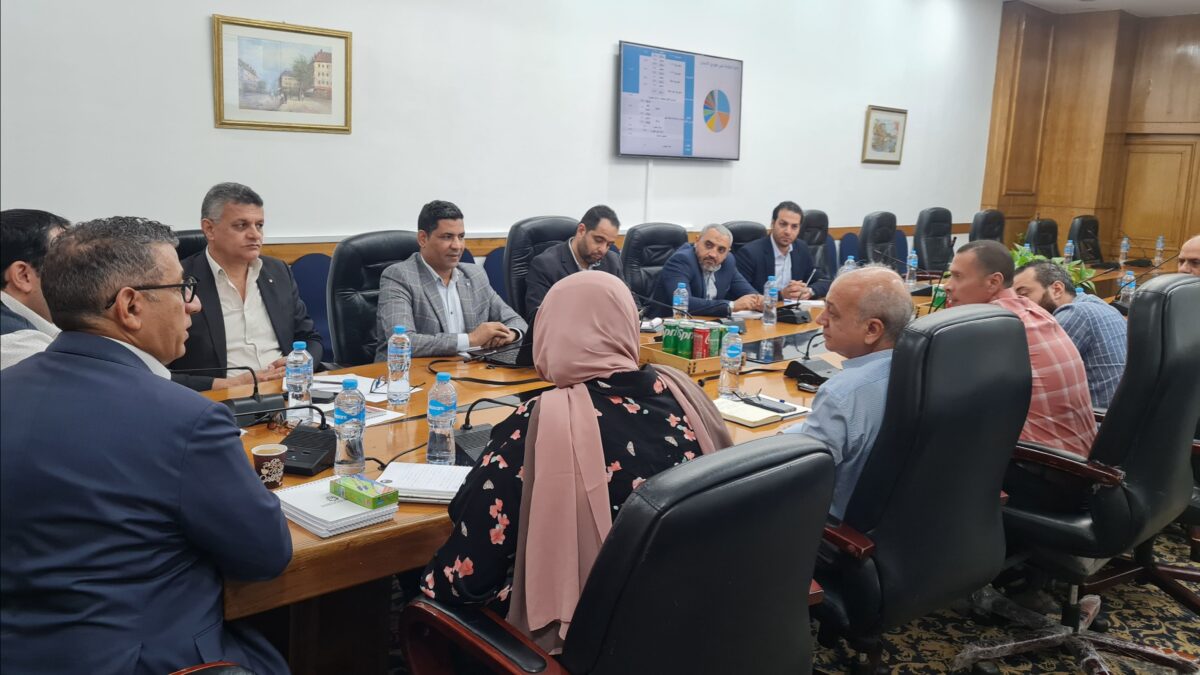
The Traditional Dairy Products Subdivision held a preliminary meeting headed by Eng. Ahmed Ghazi, a representative of the National Food Safety Authority, representatives of the TAIB Project of the US Department of Agriculture, the Rawabet Project of the International Labor Organization, and a number of sector experts to develop an action plan to support the compliance of dairy collection centers with food safety requirements.
Mr. Mahmoud Al-Bassyouni, Executive Director of the Chamber, confirmed at the beginning of the meeting the Chamber’s keenness to develop the industry and provide support to manufacturers of traditional dairy products, indicating that coordination is underway to hold a meeting in the presence of dairy collection centers and conduct an inventory check of their needs in preparation for starting to provide the necessary technical support to comply with food safety requirements and have the centers accredited by the Authority.
Eng. Ahmed Ghazi pointed out the importance of holding field visits to get to know the current situation closely and analyze the gaps in the supply chain so that the Chamber can determine the aspects of technical support necessary to ensure the safety and quality of raw milk supplied to factories.
During the meeting, Dr. Mahmoud Meilam reviewed a presentation about the sector and what has been accomplished so far, noting that there has been a positive development, as about 50 parlors have been approved on the authority’s white list.
For his part, Dr. Mohamed Al-Muhammadi, technical support officer for the “TAIB” project, explained the experience of seeking help from an international expert in the field of dairy chain development to learn about the applied experiences and benefit from the experiences of similar countries in this field and the possibility of seeking assistance from international expertise through the project.
Salah Al-Rashidi – the International Labor Organization, and Eng. Wael Refaat – the North African Agribusiness Development Company, presented the experience of the Rawabet project affiliated with the International Labor Organization in improving the dairy sector by developing the stages of the supply chain, starting with animal inventory, fortifications, nutrition, vaccinations, etc., which was positively reflected on the safety and quality of milk supplied to factories.


