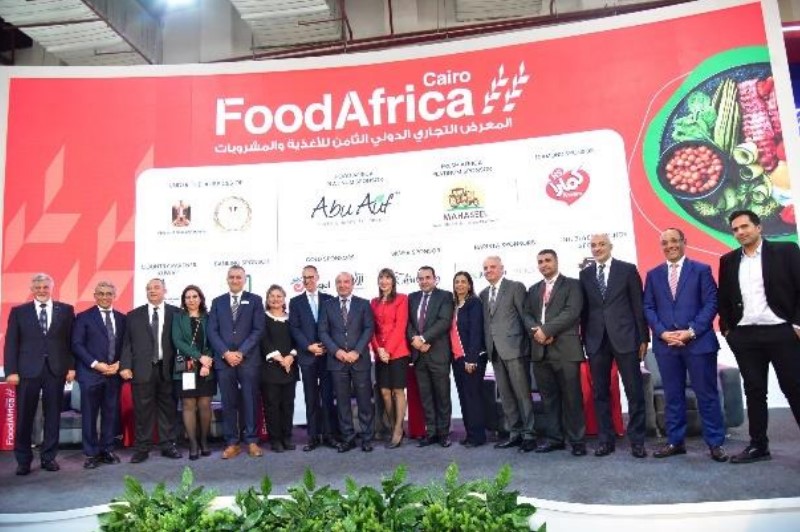
In his speech at the opening session of the Food Africa 2023 exhibition, Eng. Ashraf El Gazayerli, President of the Chamber of Food Industries, said: we are pleased with our partnership with the Food Africa Exhibition since 2015 and over 8 consecutive editions. He pointed out the great developments that food products have currently achieved in terms of increasing exports and their quality and form reflects what was achieved in the previous period. He stressed the consequences of the challenges the industry is witnessing locally, regionally and even internationally, including: Foreign currency problems that show the importance of the existence of this exhibition and its mission to increase exports and raise our competitiveness abroad. He also pointed to the close cooperation between the Chamber of Food Industries and the Minister of Supply and Internal Trade, Dr. Ali Al-Moselhi, in solving all the problems facing the sustainability of production, including ending the sugar availability crisis for factories. He stressed that the Chamber is working according to a comprehensive strategy for the development and growth of the industry that aims to raise the competitiveness of the sector through many programs in partnership with governmental and international development agencies in the fields of food safety, financing, and various programs provided at the governorate level have contributed significantly to encouraging small and medium-sized companies to join the formal economy system.
Eng. Ashraf El Gazayerli, President of the Chamber of Food Industries, continued pointing out that in previous years, the number of members of the Chamber succeeded from 3,000 in 2015 to 22,000 members as a result of the government’s issuances and financing facilitations and the Industrial Licensing Law, where licenses became subject to moderate risks and their services were disrupted in all governorates. He revealed that the Food manufacturing and Agricultural sectors achieved 9 billion dollars by the end of this current year, and that they are among the largest exporting sectors, and this is what Egypt deserves, and joint cooperation must continue to work on further developments, pointing out that the food industry sector has achieved growth in increasing exports by about 15%, and stressed that the food industry sector has promising opportunities for investment and growth due to the international interest in investing in Egypt rising, pointing to the interest of Kuwaiti companies participating in the Food Africa exhibition this year to establish partnerships for joint manufacturing in Egypt in order to export to Africa.
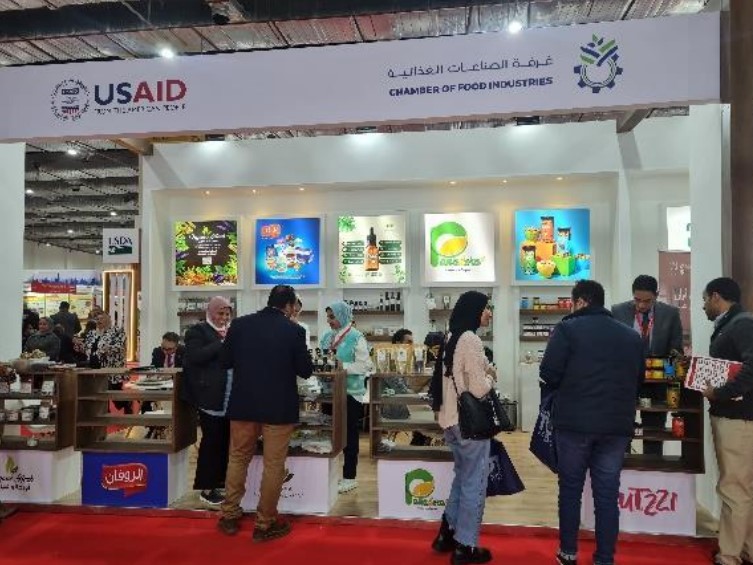
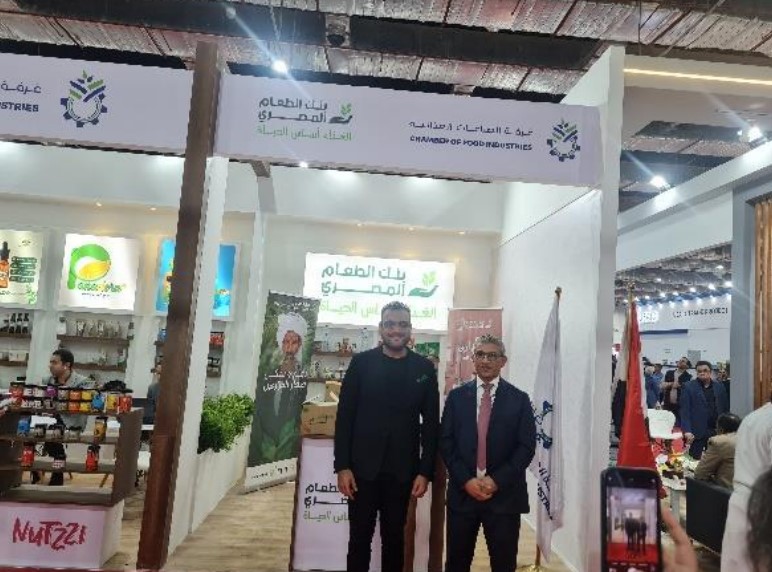
Female entrepreneurs and a number of emerging small and medium-sized companies, graduates of the Ezdhar program for developing growing companies and the Comprehensive Green Growth Project in Egypt of the United Nations Industrial Development Organization (UNIDO), participated in the Chamber of Food Industries’ pavilion as last year, within the framework of the Chamber’s community awareness and its contribution to the development of Small and Medium-sized Enterprises sector, in addition to hosting the National Bank of Egypt with a pavilion. This year, it is an active partner for the Chamber’s contributions in providing humanitarian aid and solidarity with the people of Palestine and providing their food needs.
The Chamber of Food Industries also hosted the Egyptian Food Bank Foundation at the Food Africa Exhibition 2023, and this is in light of the Chamber’s role in social responsibility, believing in the Foundation’s mission and the efforts made to achieve the goals of sustainable development and Egypt’s Vision 2030, most importantly providing basic sustainable food and raising income levels for small producers and farmers through contracts concluded with the Bank.
Mr. Mohsen Sarhan, CEO of the Egyptian Food Bank Foundation, expressed his happiness at participating in the exhibition through a partnership with the Chamber of Food Industries, and in cooperation between the bank and the Chamber to provide food commodities and all relief supplies for our brothers and sisters in Palestine through a joint cooperation protocol.
Mr. Mahmoud Al-Bassyouni, Executive Director of the Chamber, stressed the importance of the partnership with the Egyptian Food Bank, as ways of cooperation with the Bank were discussed to enhance the benefits from the technical support services provided by the Chamber in the field of agricultural industrialization and the implementation of best practices, as well as the technical support provided to comply with food safety requirements and to enter its white list. The National Food Safety Authority ensures the production of healthy and safe food for beneficiaries. This ensures the production of healthy and safe food for beneficiaries.
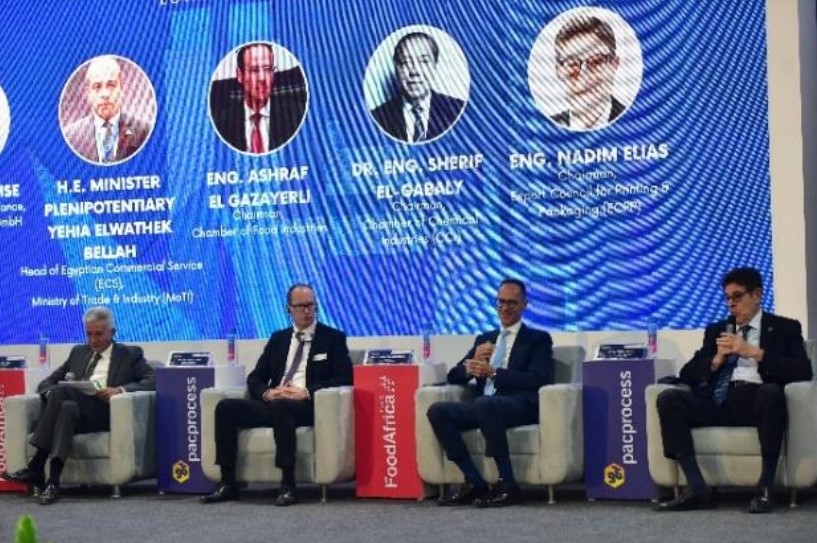
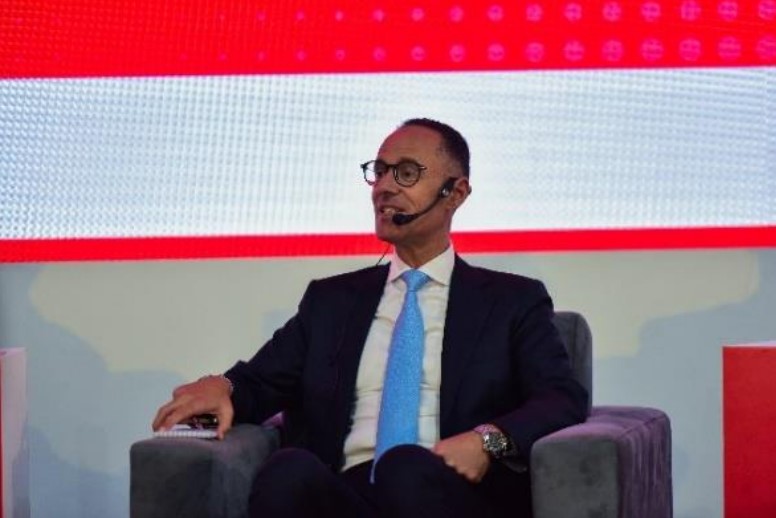
Eng. Ashraf El Gazayerli, Chairman of the Chamber of Food Industries, also participated in the discussion sessions under the title “Growth expectations for the food industries and agricultural crops sector” Focusing on the food’s safety, the session was attended by Eng. Hany Berzy, Chairman of the Food Export Council, Minister Trade Commissioner Yahya Al-Wathiq Billah, Head of the Commercial Representation Authority, Representative Abdel Hamid Al-Demerdash, Chairman of the Agricultural Export Council, and Mohsen Al-Beltagy, President of the Heya Association for the Development of Horticultural Crops, and the session was moderated by Dr. Ashraf Al-Sayed, amid a large presence of businessmen, experts, and specialists in the field of food industries and agricultural crops.
Eng. Ashraf El Gazayerli, head of the Chamber of Food Industries, stressed the importance of applying the traceability system to agricultural crops. Especially since they represent the main raw materials for the food industries, with the need for them to be compatible with the requirements of the Food Safety Authority, which increases the competitiveness of Egyptian products both locally and internationally.
Eng. Gazayerli also called for working to implement the globally followed risk system on food imports in order to save time and reduce burdens on food factories, in addition to the importance of the National Food Safety Authority’s participation in granting licenses to new factories by linking industrial licenses with the requirements of the Food Safety Authority.
ِAdditionally, he emphasized that, in spite of the significant obstacles facing the global food market, a 15% increase in food exports is a sign that Egyptian food products can compete in foreign markets. This suggests that, in order to maintain the status of the domestic industry and guarantee product supply, additional random oversight campaigns on factories are necessary. These increased campaigns will also eventually lead to food with the highest standards of quality and food safety, especially since the food product is linked to the health and safety of the Egyptian consumer.
Mrs. Rana Al Gamali, Vice President of the Chamber of Food Industries, participated in a workshop titled: “Enhancing Women’s Opportunities in Agricultural Manufacturing,” which comes within the activities of the second day, she said that the Chamber pays great attention to the role of supporting and empowering women in food and agricultural manufacturing as one of the most important axes of the Chamber’s strategy to advance the sector and raise the competitiveness of food products, which comes within the framework of its participation in achieving the Egypt 2030 vision for sustainable development. The Chamber is working in partnership with the relevant authorities and international partners on many development projects and programs that would enhance women’s opportunities in food manufacturing and the agricultural sector, in addition to supporting women’s representation in the work of the committees of the Federation of Egyptian Industries, where she chaired the first committee for businesswomen in the Federation of Industry.
She also pointed out that the Chamber includes in its membership 1,818 industry leading businesswomen, whether factory owners or managers of industrial companies, and it works constantly to address the challenges facing the growth of industry in general and to encourage small and medium enterprises and businesswomen by providing technical support and training and qualification programs in food safety and product quality, in addition to encouraging contract farming for farmers and integrating small farmers into the value-added chain system.
She explained that the Chamber provides technical support, training courses and workshops to ensure that suppliers comply with food safety requirements and with traceability standards for agricultural crops that represent primary raw materials for food manufacturing, raises awareness of procurement practices to reduce imports, supports local supply chains by selecting high-quality crops and raw materials, and supports tests and residues analysis. Noting that the Chamber signed a protocol with the Central Residue Laboratory to provide services for detecting residues in food and raw materials to members at a discount of up to 35%. The Chamber also works with about 9 donor agencies on many development programs and projects to support the growth of the food manufacturing sector as well as the agricultural sector, to increase productivity, raise competitive capabilities, accelerate the development and growth of companies, and access to global markets, including projects with the German Agency for International Cooperation, the United States Agency for International Development, and the United Nations Industrial Development Organization, and European Bank for Reconstruction.
Among the most prominent development programs and projects is the Ezdhar program for developing growing companies, which aims to provide financial and legal consultations, product development, human resources, marketing, distribution, and export qualification, and the Farms to Farms project in the field of food quality and safety, presented by the Land and Lakes Association, the second largest agricultural association in the world, which is concerned with exchanging experiences between American experts and their manufacturing counterparts, providing technical support services, and establishing a system for food safety and quality within food establishments as an essential step for qualifying to obtain accredited international certificates, enhancing product marketing opportunities, opening new markets, and training workers, and a project to develop agricultural businesses in the Egyptian countryside, and a project to use solar energy in heating operations in factories. The Chamber’s development projects and programs also include a project to serve senior German experts, which allows contracting with 20,000 German experts in 50 diverse industrial fields, a comprehensive green growth project, and a green value chain financing program in Egypt, which provides financing for small and medium-sized enterprises with sales of less than 50 million euros, and the Egyptian-German Academy program for technical training and education.
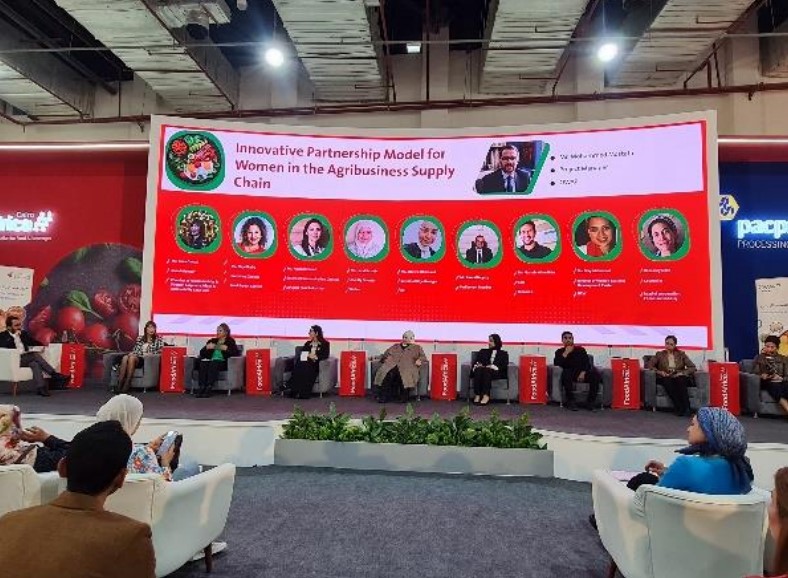
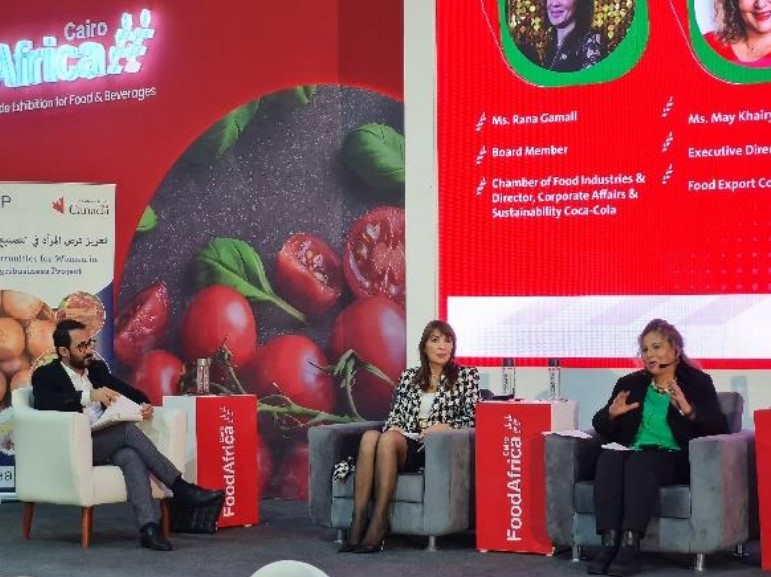
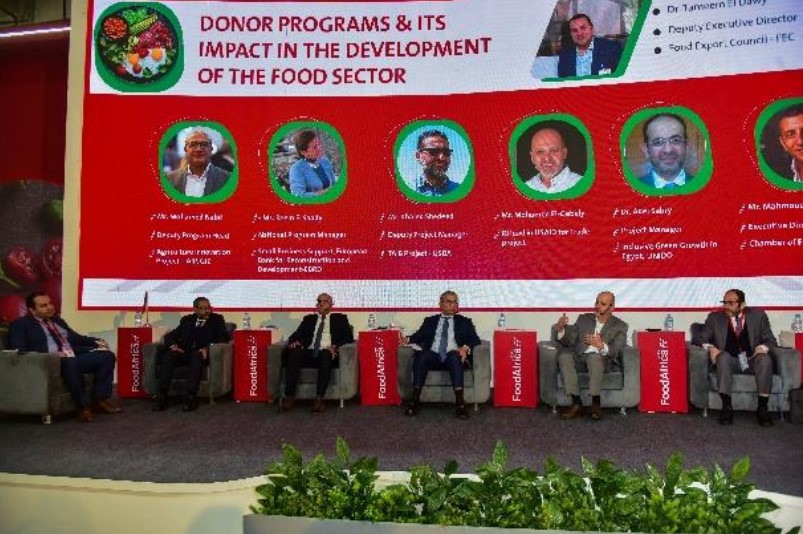
Within the sessions of the third day of the exhibition, Mr. Mahmoud Al-Bassyouni, Executive Director of the Chamber of Food Industries, participated in a session on the importance of development projects and their effects on supporting the sector. The session was moderated by Dr. Tamim Al-Dhawi, Deputy Executive Director and Director of the Export Information Department at the Food Export Council, with the participation of Dr. Khaled Shedid, Deputy of the TAIB Project, and Dr. Adel Sabry, Director of the Inclusive Green Growth Project - UNIDO, Mohamed El-Gabaly, Advisor to the Trade and Export Development Project in Egypt, funded by the United States Agency for International Development (USAID), and Mohamed Nabil, Vice President of the Agricultural Innovation Project and Senior Value Chain Advisor, at the German Development Agency (GIZ).
Mr. Bassyouni stressed that the food industry is the top priority economic sector to receive support from donors and development projects because it accounts for the majority of direct and indirect labor employment, the national product, and approximately 25% of the volume of non-oil exports.
During the session, he also mentioned that there has been a significant shift in the ways that projects and programs are designed to meet the needs of the industry and improve the skills of workers in relevant authorities and service providers so that they can continue to provide technical support services after the projects' duration has ended. Additionally, he mentioned that the Chamber is a strategic partner in 19 development programs that are run by international organizations and under the Ministry of Trade and Industry’s care. The Chamber also puts a lot of effort into making sure that the target groups receive the best possible support services.
He also sent a message to the chamber's member companies about the need to work on effective participation, as all programs and projects are provided at no cost to the Chamber’s member companies and with the highest level of quality. He drew attention to the necessity of focusing on the requirements of exporting countries, compatibility with the requirements of the green economy, resource management, gender equality, enhancing women's capabilities, and entrepreneurship.
Lastly, he pointed out that there are also cooperation protocols in the Chamber with the Central Laboratory for Pesticide Residues, the National Bank of Egypt, and the Green Path Program, which works to support companies in the agricultural manufacturing sector to comply with food safety requirements and accelerate the procedures for including them on the white list of the National Food Safety Authority, in cooperation with the project to promote agricultural business in the Egyptian countryside project funded by the German Development Agency (GIZ).
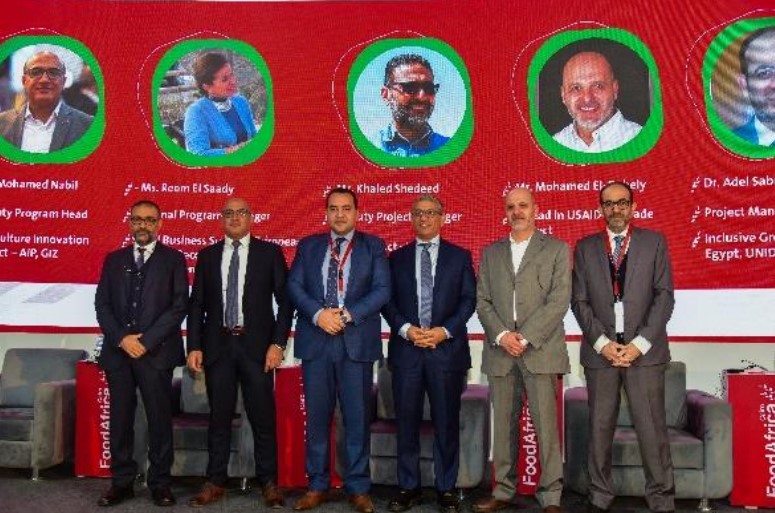
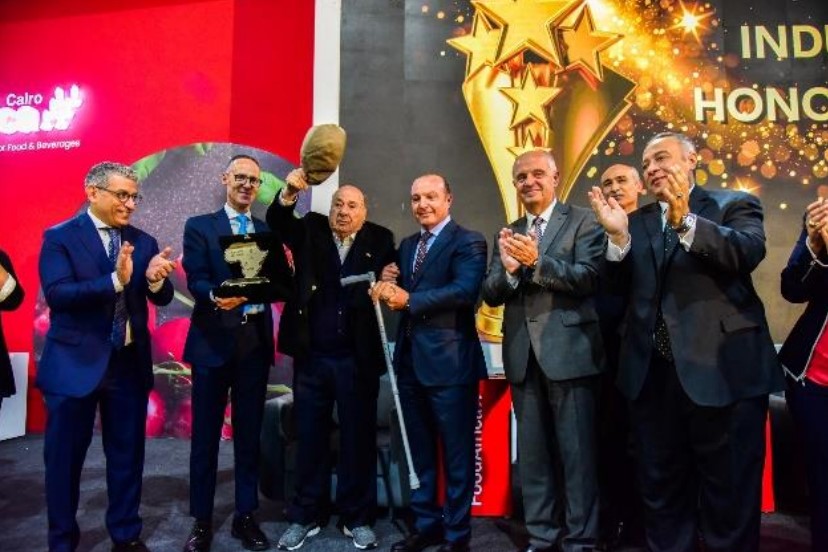
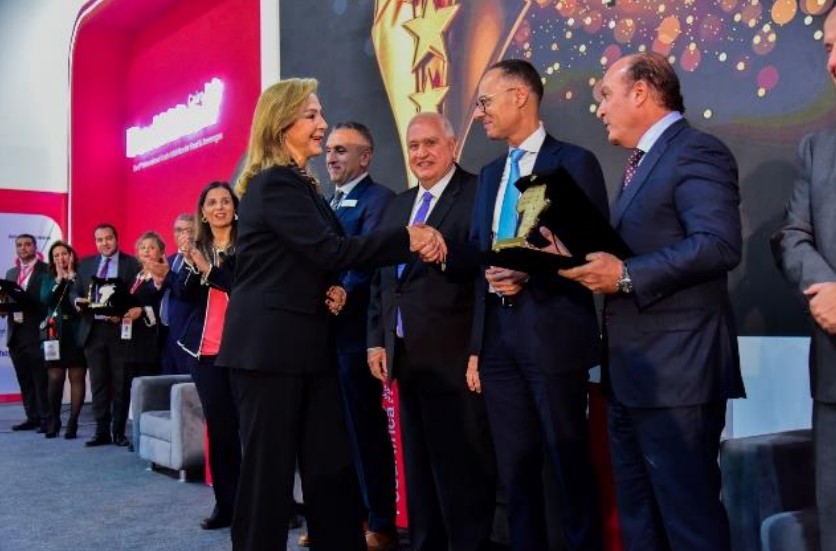
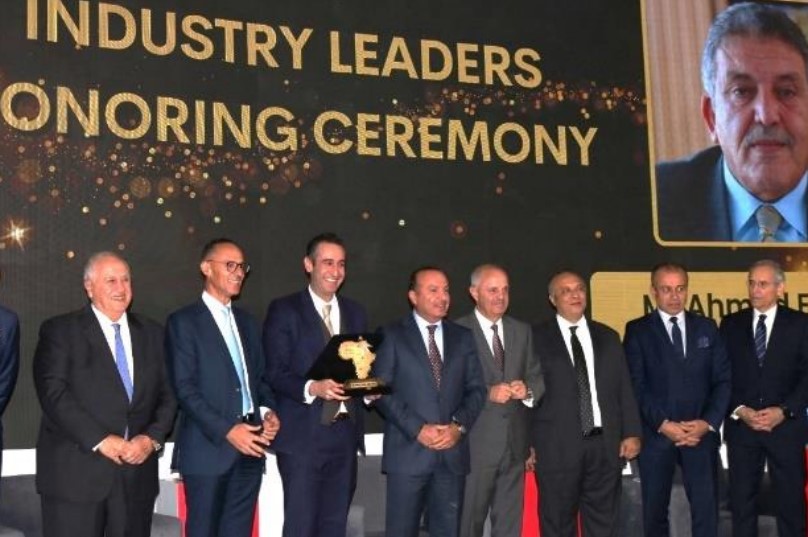
Along with the Food Export Council, led by Eng. Hany Berzy, the Agricultural Export Council, led by Eng. Abdel Hamid Al-Demerdash, the Horticultural Export Development Association (Heya), led by Mr. Mohsen El-Beltagy, and the organizers of the Food Africa Exhibition, the Chamber, led by Eng. Ashraf El Gazayerli, also took part in honoring sector icons in the food and agricultural industries for their outstanding contributions to the growth and development of Egypt's production and exports over the course of the exhibition's eighth edition in 2023.