
The conference began with remarks made by Eng. Ashraf El Gazayerli, the Chairman of the Chamber's Board of Directors. He emphasized that the 50th anniversary of the Egyptian Codex represents the Authority's current reality with the strength of its past and the significant advancements in standards, quality, and food safety in Egypt, and that the celebration of the International Codex Alimentarius is a very significant occasion for those working in the Egyptian food industry. The Chamber aims to increase the competitiveness of Egyptian food industry companies in order to provide safe and healthy food products that meet consumer demands, compete on a local and international level, suit our industry's circumstances, and reflect the evolution of the Egyptian codex, which represents Egypt's long history of agriculture and manufacturing. It works toward this goal through strategic partnerships with the Egyptian Organization for Standardization and Quality, the National Food Safety Authority, and other industry-related bodies. Eng. Gazayerli stressed that Egypt, for international companies, is an important regional center in food manufacturing and a huge market that includes 110 million consumers, providing a great opportunity for growth and development, as well as increasing exports. Dr. Khaled Sofi, Chairman of the Egyptian Organization for Standardization and Quality, also confirmed that organizing this conference and celebration comes as an affirmation of the pioneering role that Egypt plays in the field of standards and legislation at the regional and continental levels as one of the first Arab and African countries to join the Codex Alimentarius Commission membership. In recognition of the International Codex Alimentarius Commission’s efforts made by the Egyptian Organization for Standardization and Quality, which is taking steady steps towards upgrading the Egyptian standards system to keep pace with its global counterpart and its great contribution to developing the national industry, enhancing its competitiveness and achieving sustainable development goals. The conference also included a number of discussion sessions and a group of presentations on the role of the Codex Alimentarius in promoting international trade.
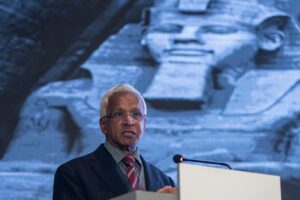
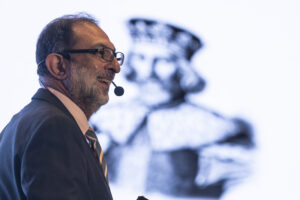
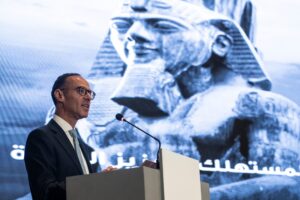
The Codex celebration opened its first session under the title “The Role of Egyptian Efforts in Achieving the Sustainable Development Goals Related to the Codex Alimentarius (CODEX)” with the participation of Dr. Hala El-Hennawy, representative of the World Health Organization’s country office in Egypt, Dr. Sahar Abdel Aziz Khairy, Director of the National Institute of Nutrition - Ministry of Health, Dr. Eva El-Zein, representative of the Regional Office of the World Health Organization - Egypt, Dr. Nader Al-Badri, plant health specialist in the Egyptian Agricultural Quarantine and Middle East and North Africa official for international standards for plant health, Mrs. Marwa Badr, Legal Advisor at the National Food Safety Authority, Dr. Khaled Shedid, Deputy Director of the Project to Support Food Control and Inspection Systems (TAIB) Project, and the session was moderated by Eng. Mariam Barsoum, Food Specifications Specialist - Technical Secretariat for the Codex Alimentarius CODEX. During the session, the role of the Codex Alimentarius in achieving the sustainable development goals was presented, and the role of some national bodies related to food and human health was discussed.
The second session continued to shed light on some examples of how the Codex prepares specifications and guidelines to develop product exchange and advance some productive sectors regionally and internationally by issuing these specifications, which often reduce the possibility of some arbitrary procedures. An overview of the role of the committee was also given. The Regional Office for the Near East developed regional specifications and introduced the efforts made to standardize some of the region’s products and issue specifications that help protect their unique character. The session was attended by Dr. Khaled Al-Zahrani, the Regional Coordinator for the countries of the Near East codex region, Dr. Hakim Mufumbiro, the Regional Coordinator for the countries of the African codex, and Dr. Thaer Yassin, the Regional Official for plant protection and plant production at the Food and Agriculture Organization of the United Nations (FAO) in the Near East and North Africa, Dr. Sherine Khallaf, Head of the Central Administration for Trade, Industry and Tourism - Ministry of Planning, and the session was moderated by Professor Samuel Godefroy, President and Chief Operating Officer of the Global Food Regulatory Science Society (GFoRSS), under the title: “The Role of the Codex Alimentarius in Promoting the Development of the Food and Agriculture Sector Regionally and Internationally.”

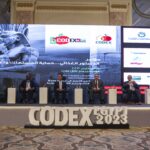
The third session of the Codex celebration also discussed the importance of Codex standards in facilitating trade and economic priorities on one hand and ensuring consumer protection on the other. Rapid change and development in markets represents one of the biggest challenges, as CODEX standards need to be compatible with these trends and products and evaluate new risks to ensure and achieve fair practices in international trade, in addition to enhancing trade movement between countries. The session was attended by Eng. Al-Shahat Selim, Deputy Executive Director for Government Affairs and Legislation, Professor Samuel Godefroy, President and Chief Operating Officer of the Global Food Regulatory Science Society (GFoRSS), Dr. Adel Ismail, Head of the Special Foods Division - Chamber of Food Industries, Dr. Hani Al-Minshawy, Head of the Specific Division for Fish and Fish Products - The Chamber of Food Industries, Ms. Sherine Fayek, responsible for the file of technical barriers of trading - the Central Administration of the World Trade Organization - the Agreements Sector, and the session was moderated by Mr. Mahmoud Al-Bassyouni, Executive Director of the Chamber of Food Industries, under the title “The Role and Importance of the Codex Alimentarius Standards in Promoting International Trade.”